

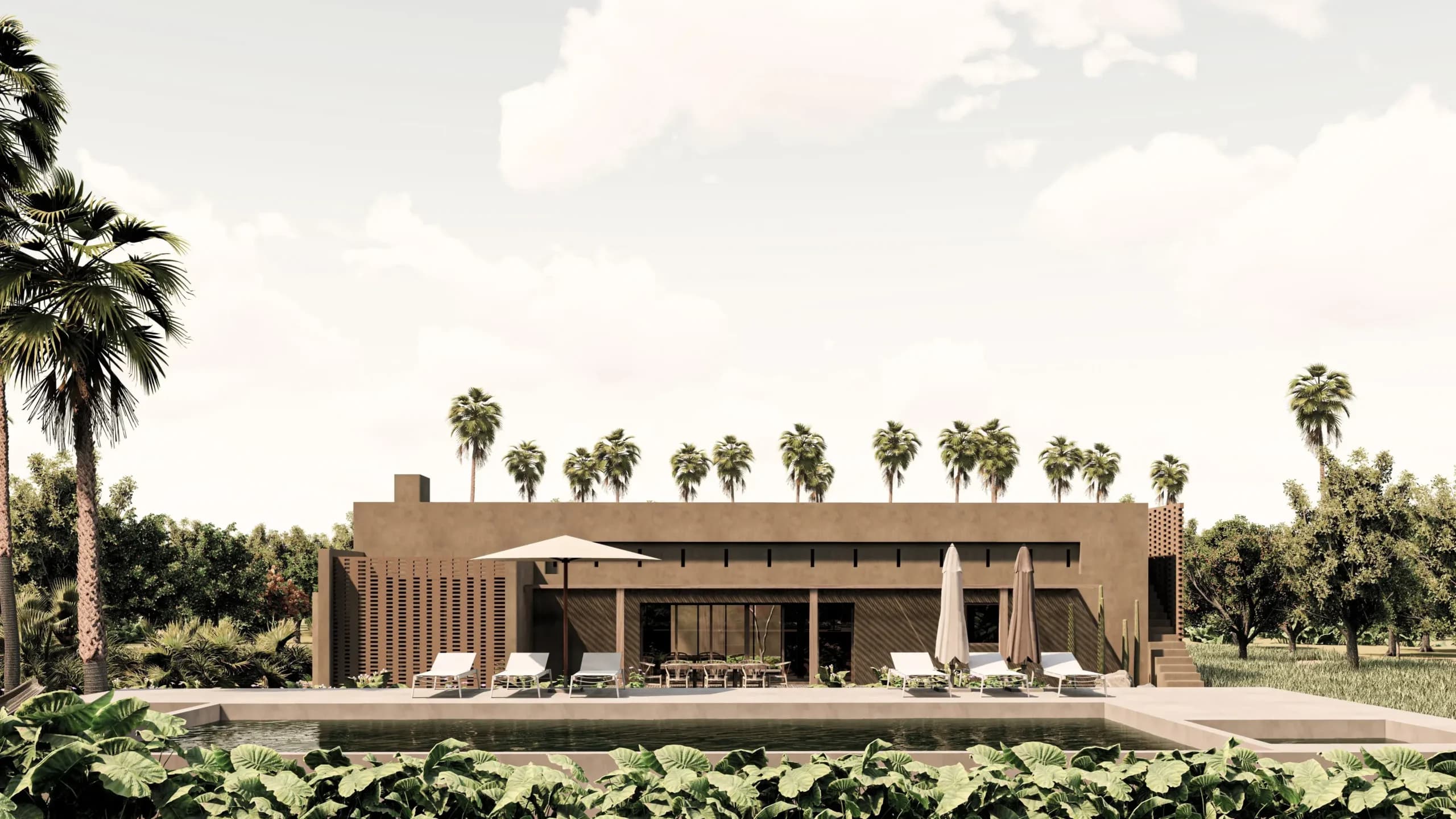
How Long Does It Actually Take to Build a House in Los Cabos?
This is the question I get most often, and I'm going to give you the honest answer rather than the optimistic one.
The total time from initial design meeting to handing you the keys — for a properly permitted, architect-supervised, medium-complexity residential project in Los Cabos — is typically 18 to 30 months. On occasion, a straightforward project with an experienced team, no complications, and favorable permit timing gets done in 16 months. On occasion, complications push a project to 36 months.
If someone is quoting you 10 or 12 months, either they're cutting corners you don't know about, or they haven't been through the process here before.
Here's the breakdown by phase, with the factors that compress or extend each one.
Phase 1: Design and schematic development (2–4 months)
The design phase starts with the first site visit and ends when you have a complete set of architectural drawings ready for permit submission. For a 150–300 m² residential project, this phase realistically takes 2–4 months.
This includes:
- Site analysis (topography, orientation, arroyo/drainage mapping, prevailing winds, solar study)
- Schematic design (floor plans, sections, massing — the big spatial decisions)
- Design development (refined drawings, material selections, coordination with structural and MEP engineers)
- Construction documents (the full technical drawing set required for permits and construction)
What compresses it: a client who makes decisions efficiently, clear initial brief, and no major redesign cycles. What extends it: scope changes after design is underway, delayed feedback, complex sites requiring additional engineering studies (seismic or geotechnical investigations for difficult terrain).
A design phase under 2 months for a custom home is rushed. Rushing design generates problems in construction — ambiguous drawings that contractors interpret differently, coordination gaps between architecture and structure, and missing details that require field solutions. The cost of 4 weeks saved in design is usually measured in months of construction delay.
Phase 2: Permit process (4–8 months)
This is the phase that surprises people most. The permit process in Los Cabos is not fast.
The process for a standard residential project in the Los Cabos Municipality involves:
1. Land use verification (Uso de Suelo) — confirming the proposed project is allowed on the lot under the current PDMD (Plan de Desarrollo Municipal del Municipio de Los Cabos). If the lot is in a fraccionamiento, the régimen de condominio documentation and homeowners association approvals may also be required.
2. DOP technical review (Dirección de Obras Públicas) — the municipal architecture and engineering review. They verify that drawings comply with local construction norms, setback requirements, height limits, coverage percentage, and a range of technical requirements. This review can trigger comments requiring drawing revisions and resubmission.
3. SAHOPE state review — for projects near the coast, in ecological buffer zones, or above certain sizes, a state-level review through SAHOPE is required in addition to municipal review.
4. SEMARNAT authorization — for projects in or adjacent to federally protected areas, arroyos with hydrological classification, or the ZOFEMAT (coastal federal zone), an environmental impact authorization from SEMARNAT is required. This is a separate process with its own timeline and can add 3–6 months to the permit track.
5. CONAGUA coordination — for projects in areas where municipal water is unavailable and a well concession is required, or where drainage needs CONAGUA approval.
Current realistic timelines:
- Standard residential lot in established area with no environmental complications: 4–6 months
- Project requiring SEMARNAT coordination: 6–12 months
- Project with complex land use questions or homeowners association review: add 2–4 months
What you cannot do is rush this process by submitting incomplete drawings or skipping required documentation. Incomplete submissions get returned. Every returned submission costs weeks. An architect who knows the current examiners, who submits complete packages the first time, and who follows up actively through the review period moves faster than one who doesn't.
Phase 3: Site preparation and foundation (2–3 months)
Once permits are in hand, construction begins with site preparation and foundation work. In BCS, this phase includes:
- Site clearing and grading
- Excavation for foundations and any below-grade elements (cisterns, basements)
- Geotechnical verification if required by the soil conditions
- Foundation concrete work and curing (concrete requires adequate curing time — skipping this causes structural problems later)
- Underground utilities: water supply pipe, electrical conduit, drainage rough-in
For most sites in Los Cabos, this phase takes 6–10 weeks with a well-organized crew. Sites with difficult access, rocky terrain requiring mechanical rock-breaking, or complex topography can extend this to 3 months.
Rainy season note: The BCS rainy season runs roughly July through October. Foundation excavations fill with water during intense rain events. Concrete placed on wet ground or during rain can't achieve design strength. Most experienced contractors in BCS plan their schedule to complete the most water-sensitive foundation work before July or after October. A project that starts site preparation in June is looking at an interrupted foundation phase.
Phase 4: Structural work and rough-in (4–8 months)
This is the core construction phase: structural walls, floor and roof slabs, framing where applicable, and the rough-in of all mechanical, electrical, and plumbing systems.
For an earthen construction project (adobe, tapial, or compressed earth blocks with a concrete skeleton), this phase tends to run longer than conventional concrete block construction because:
- Block laying and mortar curing takes time that can't be arbitrarily accelerated
- Concrete bond beams and columns are poured incrementally as wall courses build up, each requiring curing intervals
- Material delivery for earthen blocks (which may be produced on or near the site) needs careful scheduling
For a conventional concrete masonry block construction project, this phase can be as fast as 3–4 months for a 200 m² house with an experienced crew. For an earthen or high-craft-content project, 5–8 months is realistic.
Weather is a factor: the rainy season means work stoppages, material protection requirements, and crew scheduling complications.
Contractor availability is a real constraint in Los Cabos. The construction market here is active. Good crews have backlogs. An architect who can commit a reliable crew to your project in advance — because they have an ongoing relationship with that crew — produces better results than one who's trying to find available labor after the permit is issued.
Phase 5: Finishes (3–5 months)
Finishes are everything after rough structure: plaster, flooring, tiles, chukum, joinery, cabinetry, doors and windows, fixtures, paint, and exterior landscaping.
This phase is slow because it's sequential — you can't install tile over wet plaster; you can't install cabinetry before the floor is level and protected; you can't do the final electrical trim before walls are finished. The sequence has physical dependencies that can't be parallelized beyond a certain point.
What extends finishes:
- Imported materials with long lead times. Hardware, specialized fixtures, custom joinery, imported tile — these have lead times of 6–14 weeks from mainland Mexico or longer from Europe or the US. They need to be ordered during construction, not at the end. An architect who tracks lead times proactively and orders ahead keeps this phase on schedule.
- Custom or high-craft elements. If you want chukum walls, stone work, custom carpentry, or any artisan element, those craftspeople need to be scheduled in advance. They're not always available on demand.
- Change orders during construction. The single biggest extender of the finishes phase is a client who changes decisions after work has started. Every change generates rework, delay, and cost. The way to avoid this is making final decisions during design — before anything is built.
Phase 6: Inspections and occupancy permit (1–3 months)
Before you can legally occupy a new building in Los Cabos, you need a constancia de terminación de obra (completion certificate) from the DOP. This requires municipal inspections to verify that what was built matches what was permitted.
If your architect supervised construction carefully and the project matches the permitted drawings, this inspection and certificate process takes 4–8 weeks. If there are discrepancies — common when construction was unsupervised and field decisions weren't documented — resolving them takes longer.
Getting utilities formally connected (permanent CFE electrical service rather than a temporary construction meter; water meter registration) also happens in this phase and can add 2–6 weeks depending on CFE and municipal backlogs.
Summary: realistic total timelines
| Project type | Total expected timeline | |---|---| | Simple single-story, established area, no environmental permit | 16–22 months | | Medium complexity, 2 stories, some custom elements | 20–28 months | | Complex project, coastal zone, SEMARNAT required, high craft content | 24–36 months |
These are architect-supervised, properly permitted projects. A project built without proper permits can proceed faster — but the risks (stop-work orders, demolition requirements, unsaleable property, no occupancy certificate) are not worth the time saved.
What I tell clients at the first meeting: the best time to start is as soon as you're ready to commit to the design process. The worst time to rush any phase is at the beginning — because rushing design generates problems that multiply through every phase that follows.
Schedule a free consultation → info@symbioticarq.com
Symbiotica
Ready to start your project?
Free 60-minute consultation — no commitment required.